The feminist movement in Zacatecas did not emerge in isolation or suddenly, but rather as part of a broader historical process linked to the development of feminism at the national and Latin American levels. Demands for equal rights, access to justice, and the eradication of violence against women began to gain momentum in the Latin American region from the second half of the 20th century, especially following international conferences on women and social movements that challenged structural gender inequalities.
In Mexico, these discussions began to solidify in the 1970s and gradually spread to the states, where activists, academics, and civil society organizations began to promote local agendas. In Zacatecas, this process was gradually built through the organization of women who, from different social spheres, began to reflect on the conditions of inequality and to promote changes in the institutional and social spheres.
During the 1990s and early 2000s, the first formal efforts to incorporate a gender perspective into public policies were consolidated in Zacatecas. This process was accompanied by the participation of researchers, public officials, civil society organizations, and collectives who began to bring to light historically normalized problems, such as violence against women, workplace inequality, limited political representation, and barriers to accessing justice. These efforts led to the development of assessments, research, and spaces for debate that placed the need to address the specific problems faced by women in the state on the public agenda.
One of the most significant steps was the creation of government agencies dedicated to serving women and promoting gender equality. Over time, these actions led to the consolidation of the State Secretariat for Women, which facilitated the development of gender-focused public policies and the coordination of efforts among state agencies, municipalities, and civil society organizations. Through these institutions, programs were implemented to promote equality, prevent violence, and strengthen women’s access to educational, economic, and social opportunities.
The feminist agenda also began to be reflected in legislative advances. One of the most important developments was the approval of the Law on Women’s Access to a Life Free of Violence for the State of Zacatecas, which established institutional mechanisms to prevent, address, and punish gender-based violence. This legislation recognized different forms of violence and consolidated the State’s responsibility for protecting women’s rights.
Another significant advance was the criminalization of femicide in the State Penal Code, a fundamental step toward making extreme violence against women visible and strengthening the justice system. Simultaneously, protocols for victim support, training programs for public servants, and the creation of municipal offices for women were promoted, with the aim of expanding service coverage and making them more accessible to the population.
Significant progress has also been made in the political sphere. Reforms regarding gender parity have increased women’s participation in elected office and in public administration. These measures have contributed to a growing number of women occupying decision-making positions and actively participating in the development of public policies.
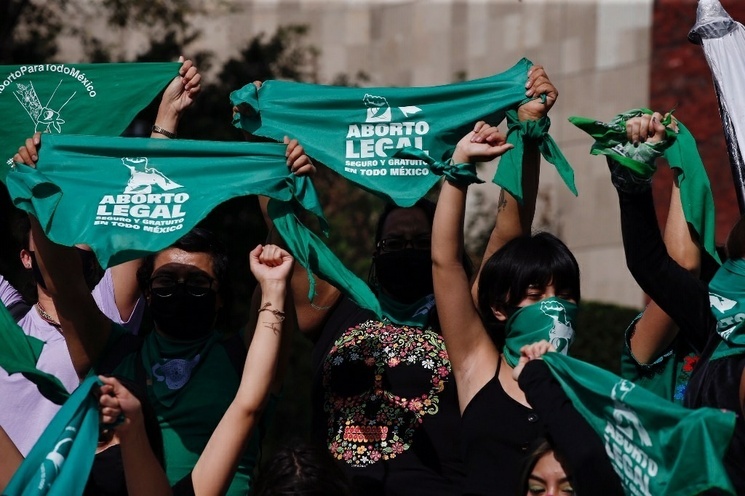
In recent years, the feminist movement in Zacatecas has gained greater visibility through the organization of collectives, social mobilizations, and marches that seek to denounce gender-based violence and demand justice for victims. These expressions have brought issues such as femicides, sexual violence, substantive equality, and women’s right to decide over their own bodies into the public debate.
One of the issues that has generated the most discussion is the decriminalization of abortion. At the national level, several court rulings have declared the absolute criminalization of abortion unconstitutional, which has fueled the debate in the states. In Zacatecas, this discussion has been primarily promoted by feminist collectives and human rights organizations seeking to guarantee access to safe and stigma-free reproductive health services.
Source: ljz